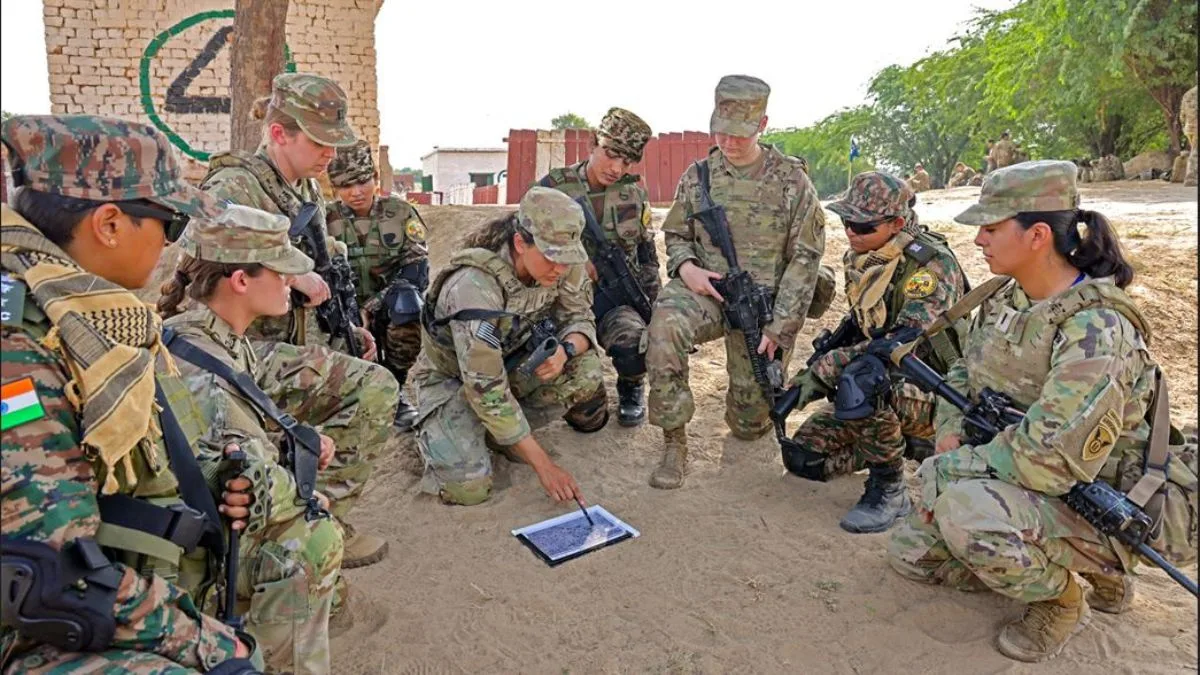
In a landmark move aimed at strengthening gender representation in public service, the Punjab government is set to appoint retired women officers from the Indian Armed Forces as District Defence Services Welfare Officers, marking the first such initiative in the 52-year history of the Defence Services Welfare Department.
The decision is being viewed as a significant administrative reform that places Punjab among the pioneering states to entrust former women military officers with key responsibilities in the welfare framework for ex-servicemen and their families.
Advertisement
According to sources, the selection process conducted through the Punjab Public Service Commission (PPSC), comprising a written examination and interviews, has been completed. Four retired women officers holding the rank of Lieutenant Colonel have been shortlisted for appointment, and formal appointment orders are expected to be issued shortly.
Officials familiar with the matter said the development follows recent amendments in recruitment norms that widened eligibility criteria for these positions. Under the revised framework, retired Short Service Commission (SSC) officers are now eligible to apply for the posts, provided they have attained the rank of Lieutenant Colonel or an equivalent or higher rank during their military careers.
The changes are expected to help the department attract experienced officers at a relatively younger age, enabling them to contribute for longer periods. Administrative officials believe the revised policy will strengthen the department’s functioning while also addressing long-standing manpower shortages.
Under existing military service conditions, SSC officers generally serve for up to 14 years and can reach the rank of Lieutenant Colonel after around a decade of service. As a result, many leave the armed forces at a comparatively younger age than Permanent Commission officers, who typically retire much later, depending on rank and service tenure.
The appointments also reflect the broader transformation taking place within India’s armed forces. Women were first inducted into several non-medical branches of the military through the Short Service Commission route in the early 1990s. Over the years, their role has expanded significantly, with women officers now being granted Permanent Commission opportunities across the Army, Navy and Air Force in multiple streams.
The Defence Services Welfare Department plays a crucial role in addressing issues related to ex-servicemen, war widows, serving personnel and their dependents. The department’s structure includes a Director, generally of Brigadier rank or equivalent, along with district-level officers posted across Punjab. In addition, several officers are stationed at the headquarters in Chandigarh to oversee administrative and welfare-related functions.
Sources indicated that the department has been facing an acute shortage of officers for some time. At present, only a handful of officers are managing responsibilities that extend across multiple districts in addition to headquarters duties. The induction of the four women officers, along with a proposed recruitment of several other retired defence personnel, is expected to provide much-needed administrative support.
Officials said the recruitment process is also navigating reservation-related requirements prescribed under the Punjab government rules. Certain posts earmarked for reserved categories cannot be filled through the general category route, which has influenced the pace of appointments. Despite these procedural challenges, efforts are underway to fill vacant positions and improve the department’s operational capacity.
The upcoming appointments are being seen not only as an administrative necessity but also as a symbolic step towards greater participation of women veterans in governance and public service. Observers believe the move will bring valuable military experience, leadership skills and field-level understanding to the welfare system while creating new opportunities for retired women officers to continue serving society beyond their military careers.